| WINTER FIELD PEAS: Pisum sativum |
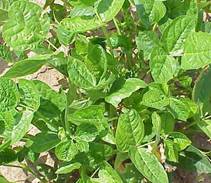 |
The winter field pea is a cool-season annual legume with sufficient winter hardiness for the southern 1/2 if Kansas. Similar in appearance to the garden pea, winter field peas are vining with seeds borne in pods. Flowers are purple and seed color is mottled gray. Root growth is massive providing excellent erosion control and soil improvement.
Well-drained clay loam soils of limestone origin are best for field pea production. Soil drainage should be good to excellent as field peas will not tolerate water-logged conditions. Therefore, heavy clay soils should be avoided. High temperatures can severely injure the crop. Field peas perform best in cool temperatures when rainfall is fairly abundant during the fall, winter and spring months.
A very versatile crop, winter field peas are utilized for hay, silage, crop rotation, cover crop and soil improvement. Planted in late summer (August/September) the crop protects the soil from erosion during the winter and spring months and then can be turned under as a green manure crop.
USE AND MANAGEMENT:
In Kansas, winter field peas are most often used as a cover crop, protecting the soil from erosion during the fall and winter. The following spring (late March or April) the peas are turned under as a green manure crop. In this management system, much greater benefit will be achieved if plants are allowed to reach maximum growth. Forage yields often double by delaying harvest from early March until April. Winter field peas managed in this manner will provide roughly 40 lbs. nitrogen for subsequent crops.
Winter field peas produce a forage of very high quality. When peas are utilized as a forage legume, best performance is obtained by growing them in association with small grains. Winter pea/small-grain combination provide excellent grazing, hay, or silage. The grain stems help support the pea vines, reduce lodging and make a better balanced feed. For optimum hay or silage production and quality, harvest should begin when the first pods begin to appear.